 Halal Check
Know what's in it. And why it matters.
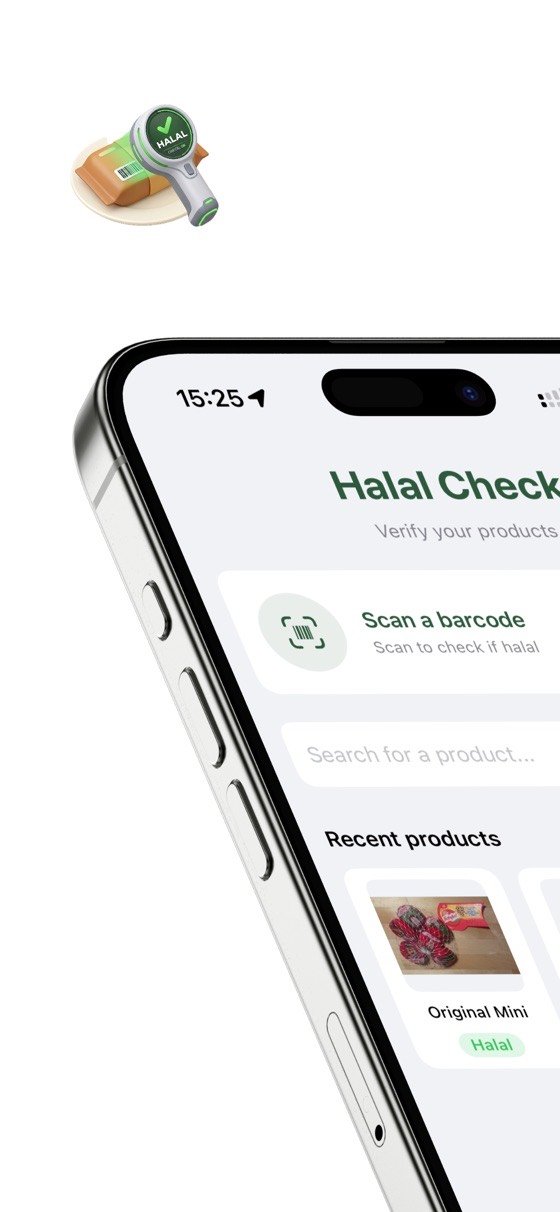
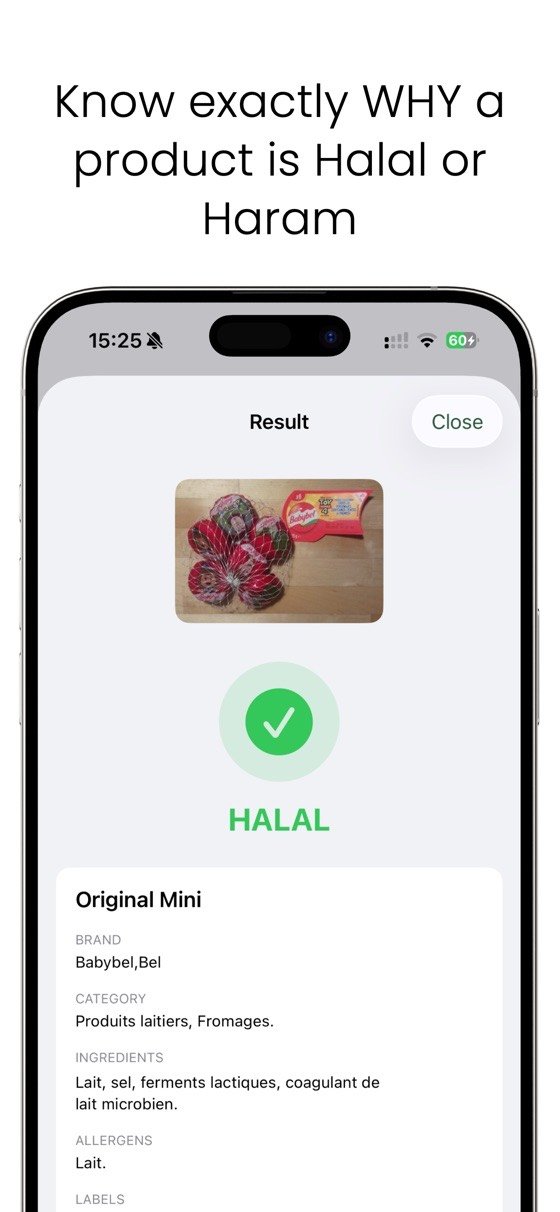
Scan a barcode and Halal Check reads the ingredient list for you — then names the exact ingredient behind the verdict, so you can judge for yourself.
A verdict is not enough. Every result comes with its reason.
Gelatin, mono- and diglycerides, E471, natural flavouring, shellac. The label is technically complete and practically unreadable. The question is never whether the ingredient is listed. It is whether you can tell what it came from.
Barcode to answer, in the aisle.
No typing, no browsing, no account. Point the camera and read the result before you put it in the basket.
Scan the barcode
Works with EAN, UPC and QR codes. No barcode? Type the product name instead.
The list gets read
The ingredient list is pulled from a global food database and every entry is checked, additives included.
You get the reason
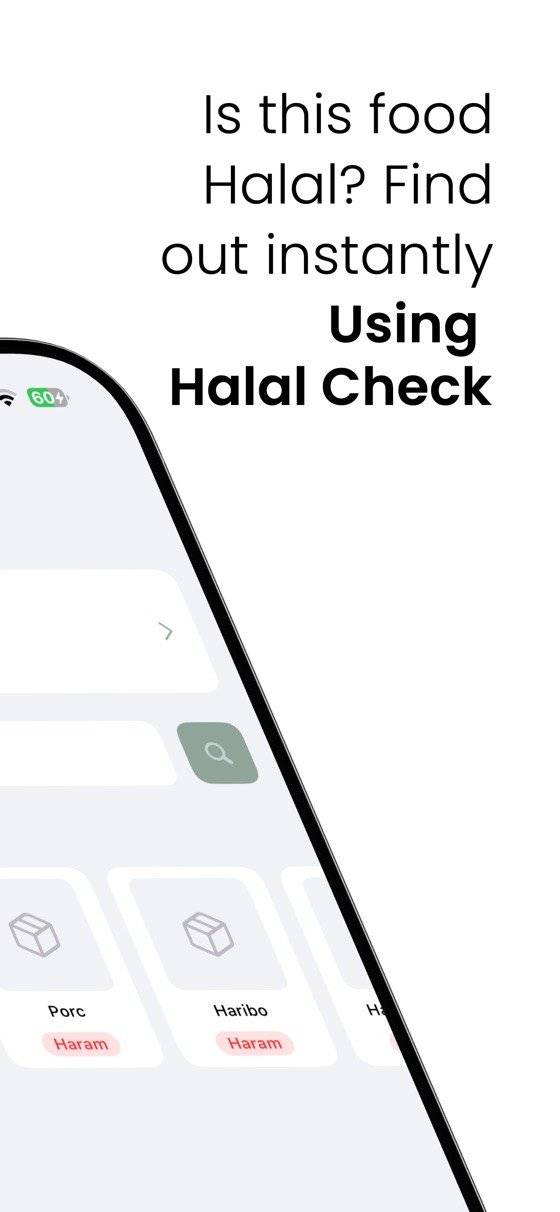
Not just halal or haram — which ingredient decided it, so you can look it up yourself if you want.
The things that hide in a label.
Most doubtful products are not doubtful because of the obvious ingredient. They are doubtful because of a derivative three lines down, listed under a code.
- Pork and its derivatives — gelatin, lard, pork-based enzymes.
- Alcohol and alcohol-based ingredients, including carriers in flavourings.
- Non-halal meat sources and animal-derived enzymes.
- E-numbers and additives whose origin can be animal, plant or synthetic.
- Blood derivatives, rarely named plainly on a label.
Built for the supermarket, not the desk.
The reason, every time
Each verdict names the ingredient behind it. You learn the recurring ones and stop needing the app for them.
Search without a barcode
Loose products, bakery items, restaurant dishes: type the name and get the same analysis.
Scan history
Everything you have checked stays available, so a second look at the same product costs nothing.
A clear answer in the aisle.
Designed to be read in three seconds, one hand on the trolley.
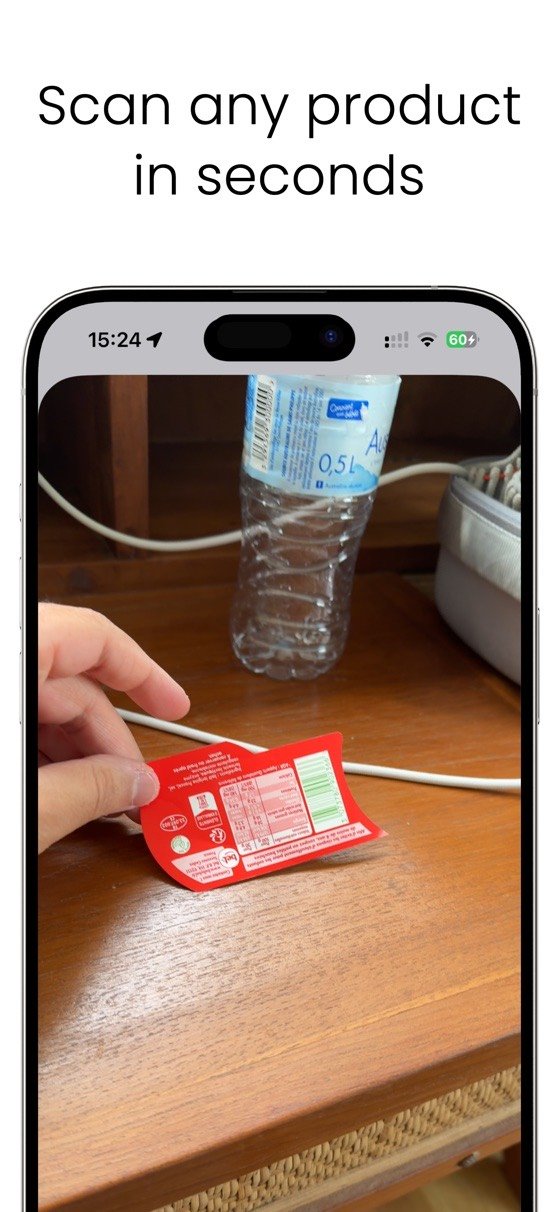
The ingredients worth knowing by heart.
A handful of additives account for most of the doubt. Learn those and the label stops being opaque.
Is gelatin halal? What the label does and doesn't tell you
Gelatin can come from pork, cattle or fish — and the label rarely says which. How to find out.
Read the guide
E-numbers and halal: the additives worth knowing
E471, E120, E631, E904: which codes can be animal-derived, and which never are.
Read the guide
5 best halal food scanner apps in 2026
What separates a useful halal scanner from a guessing machine — ours included, weaknesses and all.
Read the comparisonGood to know.
Does this replace a halal certification?
No, and it is important to be clear about it. Halal Check performs an AI-assisted analysis of a published ingredient list. It does not inspect a supply chain, a slaughter method or a factory. For anything that matters to you, a certification body or a qualified scholar remains the authority — the app is there to narrow things down and tell you what to ask about.
How reliable is the verdict?
It is as reliable as the ingredient list it reads. Where a label says only “natural flavouring” or “emulsifier”, the origin is genuinely undetermined, and the app says so rather than guessing. That honest “uncertain” is the most useful answer it can give on those products.
What does it cost?
The download is free. Scanning and analysis require the Halal Check Premium subscription, which unlocks the barcode scanner, the AI analysis, the explanations and the scan history.
Does it work outside my country?
The ingredient data comes from a global food database, so coverage is good on internationally distributed products and thinner on small local brands. When a barcode is unknown, use the manual search.
Which devices?
iPhone, on a recent version of iOS, with a working camera for the barcode scanner.
Stop guessing in the aisle.
Scan the barcode, read the reason, decide for yourself.
Download on the App Store