 Halal Check
5 best halal food scanner apps in 2026
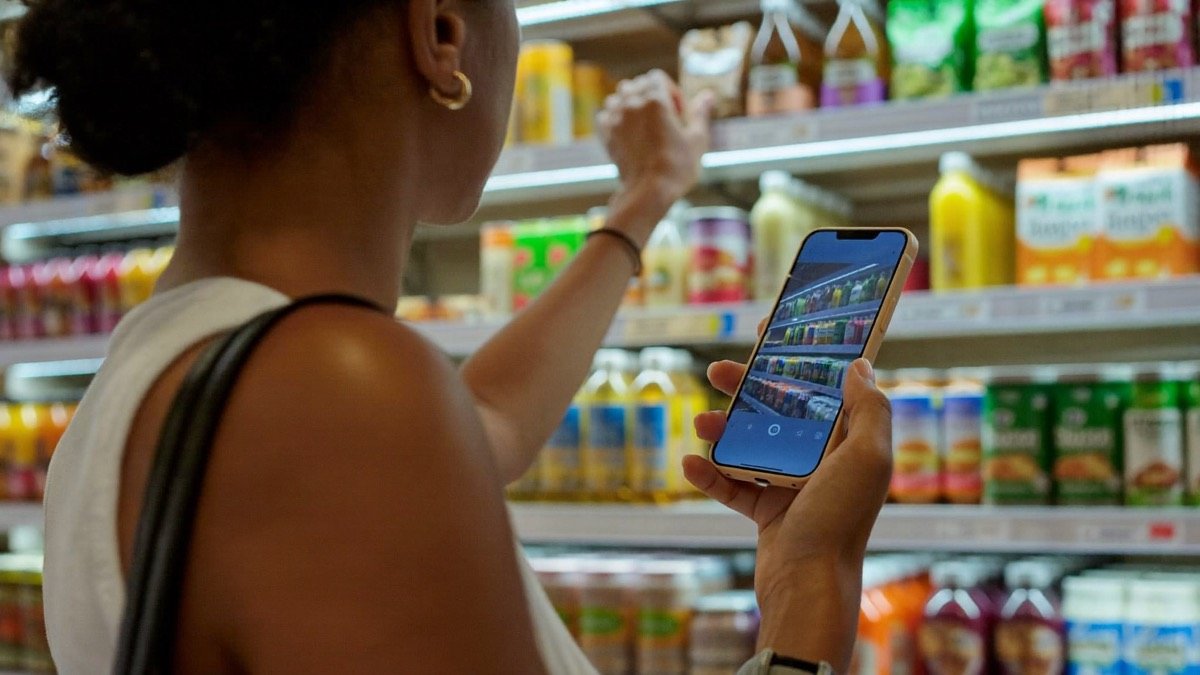
Barcode scanners for halal food all promise the same thing and deliver wildly different quality. The gap is not in the scanning — every app can read a barcode — it is in what happens between reading the ingredient list and showing you a verdict.
The six criteria that actually separate them
- Does it say why? A bare "haram" is unusable: you cannot check it, learn from it, or explain it to anyone. An app that names the ingredient behind the verdict is doing the useful part of the job.
- Does it admit uncertainty? This is the single best test. When a label says only "emulsifier", the correct output is "undetermined". An app that returns a confident verdict there has invented the missing information — and if it invents once, you cannot trust the rest.
- How good is the product database? Coverage is regional. Test with products you actually buy, not with Coca-Cola.
- Is there a manual search? Loose products, bakery, restaurant dishes and anything without a barcode account for a large share of real questions.
- Does it distinguish certification from analysis? Reading a label and verifying a supply chain are different claims. An app that blurs them is overselling.
- What does it cost, and for what? Subscription, credits or one-off. For a tool used weekly in a supermarket, a subscription can make sense — provided the scanning actually works on your local products.
The test to run firstScan something whose label says only "natural flavouring" or "E471". If the app gives you a confident yes or no, it is guessing. If it tells you the origin is not stated, it is being honest — and honesty is the whole value of this category.
The kinds of app you will find
General food scanners with a halal filter
Nutrition apps that added a halal check among many other scores. Usually excellent product databases, weaker on additive reasoning, and the halal logic is one feature among dozens.
Community-maintained halal databases
Lists built and verified by users or associations. Very strong where the community is active and the coverage is local; thin or outdated elsewhere. Their strength is human verification, which no automated reading can match.
AI ingredient analysers
Apps that read the published ingredient list and reason about each entry. Best coverage, since they work on any product with a listed composition, but entirely dependent on the quality of that list. Ours sits here.
Where Halal Check wins, and where it doesn't
We make this app, so weigh this section accordingly — but a comparison that only flatters us would be worth nothing to you.
What it does well
- Every verdict names its reason. You see the ingredient that decided it, which means you can verify it and eventually stop needing the app for the recurring ones.
- It says "undetermined" when it is. On an unqualified emulsifier or flavouring, it reports the ambiguity rather than resolving it for you.
- Manual search for anything without a barcode.
- Scan history, so a repeat check costs nothing.
Where it loses
- It is not a certification, and cannot be. It reads labels. It does not inspect abattoirs, supply chains or factories. For anything that genuinely matters to your practice, a certification body remains the authority.
- Scanning requires the subscription. There is no free scan, which is a real disadvantage against free community apps.
- Coverage is thinner on small local brands. The database is global; a regional supermarket own-brand may not be in it.
- iPhone only. No Android version.
Honest summaryIf you want to understand why a product is doubtful and learn to read labels yourself, this app is built for that. If you want a free tool, or community-verified rulings on local products, a community database will serve you better.
What no app does
None of them can tell you what the manufacturer did not write down. The origin of an unspecified E471, the slaughter method behind a gelatin, the cleaning protocol on a shared production line — these are outside what any label reader can see. The honest ceiling of this category is narrowing the question and telling you precisely what to ask, which is genuinely useful, and considerably less than "this app tells you what is halal".
Keep reading
Is gelatin halal? What the label does and doesn't tell you
Gelatin can come from pork, cattle or fish — and the label rarely says which. How to find out.
Read the guide
E-numbers and halal: the additives worth knowing
E471, E120, E631, E904: which codes can be animal-derived, and which never are.
Read the guide